Every November, the warnings begin. “The average person gains five to ten pounds during the holidays!” Suddenly a season meant for gratitude and connection becomes a six-week battle against food.
But what if the warning itself is misleading?
What does the research say?
A frequently cited study published in the New England Journal of Medicine tracked 195 adults around the holiday season. Average holiday weight gain was about 0.8 pounds—not five or ten. A later review found average gains around 0.9 to 2 pounds across adult studies. These are averages from specific research samples, not guarantees about what any individual will experience.
The more interesting finding was that some of the small gain remained months later. The issue may be less about one celebratory meal and more about the patterns that continue after it.
The scale doesn’t tell the whole story
A sudden jump after Thanksgiving can reflect water retention from sodium, replenished glycogen and associated water, and more food in the digestive tract. It is not automatically an equivalent gain in body fat. For women in perimenopause, changing menstrual patterns and fluid shifts can make the scale even more confusing.
Ask a better question than “How much did I gain overnight?” Ask “What do my habits look like across several weeks?”
The holiday permission slip
There is a difference between enjoying special meals and declaring that your health does not count until January. You wouldn’t stop brushing your teeth for six weeks because the holidays are busy. Why abandon every wellness routine?
Your strategy needs to accommodate celebrations rather than pretending they won’t happen.
Five ways to enjoy the season
First, eat regular meals. Saving all your food for a huge dinner can leave you uncomfortably hungry.
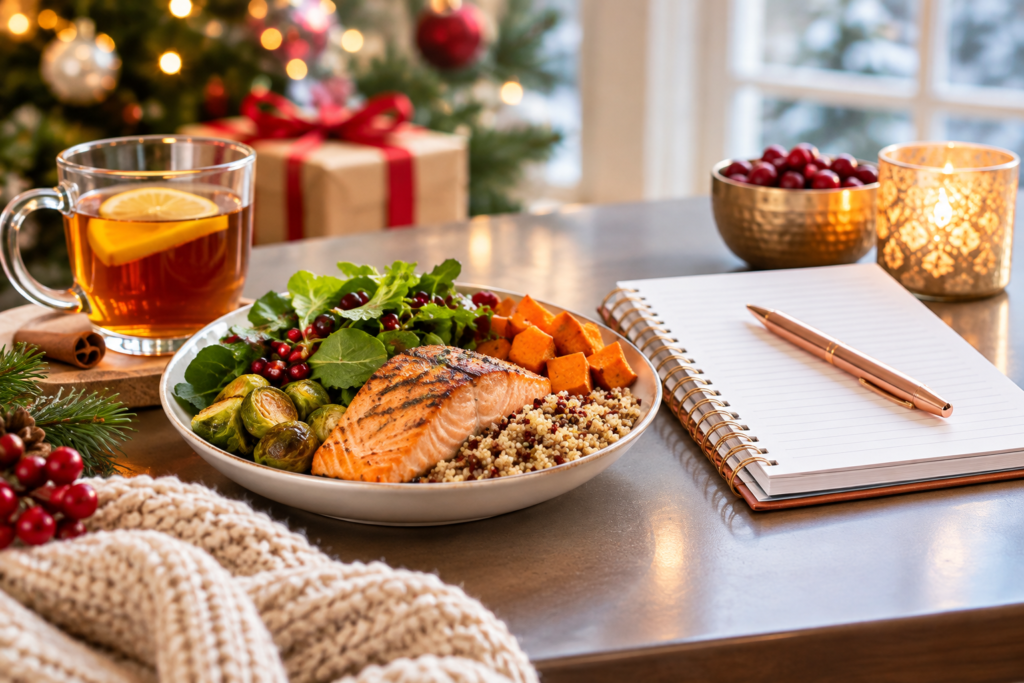
Second, build a plate you actually want. With Complete in 3, look for protein, fiber, and healthy fat. A carbohydrate you enjoy can be part of the meal, including a fiber-rich option like beans or sweet potatoes.
Third, choose your favorites intentionally. Grandma’s dressing may be worth savoring; the cookies you don’t even like may not be.
Fourth, protect your ordinary habits. Water, movement, sleep, and balanced meals still matter even when the schedule changes.
Fifth, return to your routine at the next practical opportunity. Not Monday. Not January. The next meal or ordinary day is enough.
A better measure of holiday success
Instead of asking how to avoid every ounce of weight gain, ask: “What habits would make me proud of how I cared for myself this season?”
At Atlanta Wellness Clinic, a Nutrition Audit helps identify what, when, and how you’re eating—and the real-life patterns that may be affecting your goals. You don’t need a fear-based holiday plan. You need a workable one.
Next step: Explore the AWC Nutrition Audit and identify the habits you want to protect.
Research: A Prospective Study of Holiday Weight Gain (2000) and Effect of the Holiday Season on Weight Gain: A Narrative Review (2017).
Health content is educational and does not replace individualized medical advice.